In October 2026, homes in Brookside's ZIP code, 64113, sold after three days on market. The median sale price was $650,000, and buyers paid an average of 2% over the asking price that month, according to the Inside Brookside October 2026 sales report, which draws on Heartland MLS data. Three days is too short to learn the neighborhood while you shop. On a map, Brookside is one name. On the ground, it is a set of separate subdivisions, mostly built by the J.C. Nichols Company between the 1910s and the 1940s. Each has its own boundaries, house types, association and landmarks. In this market, the buyers who are ready when a listing appears already know which of those subdivisions they want.
That holds even for new construction. The one new single-family project now planned in Brookside, on the former Bryant Elementary site, is planned in the same house styles as the older subdivisions around it.
A Fast Market With Fewer Sellers
From January through October 2026, Brookside recorded 190 home sales at a median price of $627,500, compared with 218 sales at $624,500 over the same months of 2025. Prices barely moved, about 12% fewer homes changed hands, and the report put days on market at three in both years. It links the drop in sales to higher interest rates and to owners choosing to stay put.
Under that median, prices vary widely. In October 2026, the lowest Brookside closing was $211,000 and the highest was $2.1 million, which was $525,000 over asking and paid in cash. In mid-November, the 23 active listings in 64113 ranged from $299,950 to $3.125 million, with a median list price of $525,000. That tenfold spread falls inside one ZIP code that holds subdivisions planned for different households and built on very different lot sizes. With few listings and fast sales, knowing those differences is preparation a buyer can do in advance.
Where the Lines Fall
Here are the subdivisions whose associations publish their boundaries and history.
| Subdivision | Boundaries as described by its association | Built | House character |
|---|---|---|---|
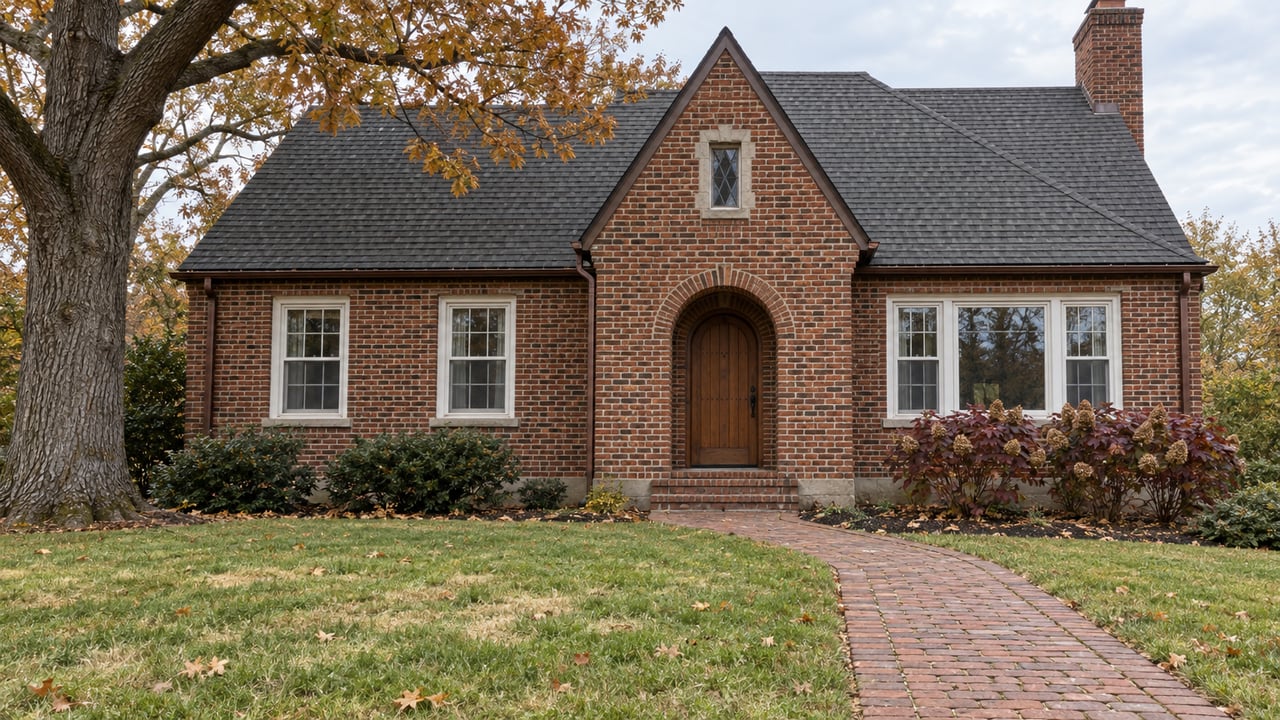
| Armour Hills | Brookside Road, 65th Street, Oak Street, Gregory Boulevard | Land bought by Nichols in 1922, built over the following decade | Bungalows and Tudors across 1,062 residential lots |
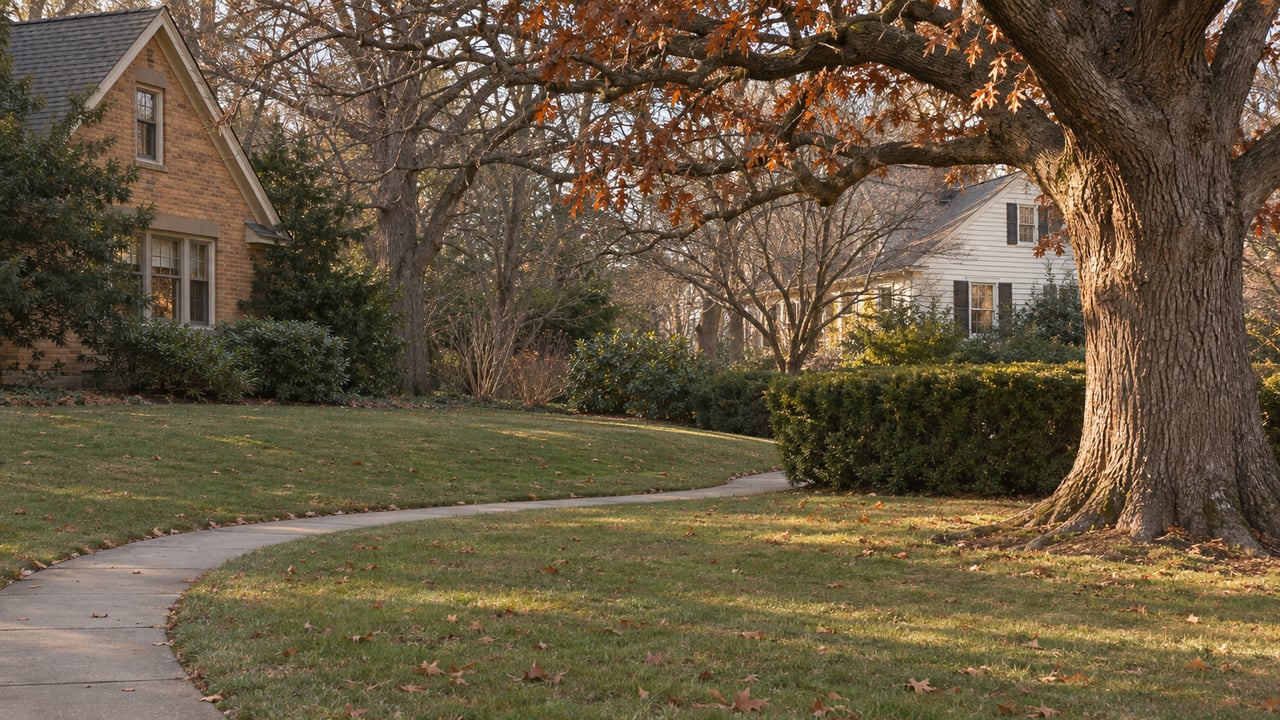
| Romanelli West and Meyer Circle | Ward Parkway to State Line Road, 64th Terrace south to Gregory | Association founded 1951 | 330 homes on large, tree-shaded lots with wide streets |
| Oak Meyer Gardens and Armour Hills Gardens | 63rd to 69th Streets, Oak Street to Holmes Road | Association 1927, last section around 1946 | Bungalows, larger homes and duplexes |
| Morningside | East 59th to East 65th, Trolley Track Trail to Oak Street | Not stated by the association | 529 homes |
| Rockhill Gardens | Gregory Boulevard, 75th Street, Oak, Harrison | Begun 1929, more than 500 homes by 1945 | Mostly English Tudor and two-story Colonial |
| Wornall Homestead | 57th Street, Wornall Road, 63rd Street, Trolley Track Trail | Many homes more than 100 years old | Historic homes near the 1858 John Wornall House |
The histories show how differently these blocks began. Nichols first planned Armour Hills as a moderately priced bungalow subdivision for small families. Crestwood, which Nichols developed in 1919, was marketed as a "garden home" district. According to a Midtown KC Post history of the neighborhood, its Colonial Revival and Tudor Revival homes typically sit on lots with 45 to 60 feet of frontage and 100 to 120 feet of depth, along curving streets laid out by Hare and Hare. The Homes Associations of Kansas City credits builder Napoleon W. Dible with much of Rockhill Gardens' Tudor and Colonial housing. Greenway Fields, southwest of Wornall Homestead, traces its homes association to April 21, 1922, when it was formed to include blocks of both Greenway Fields and Wornall Manor.
What Each Association Pays For
Associations differ in more than boundaries. What a household pays, and what that money maintains, is set block by block.
Armour Hills lists Arbor Villa Park, three pocket parks, two fountains, 14 islands and its stretch of the Trolley Track Trail among the things it maintains or helps maintain. Its calendar has included a July 4 parade, a dumpster day, a garage sale and a park movie night. Its dues page, published in 2023, lists a $130 base assessment plus an amount based on lot frontage. Arbor Villa Park was dedicated in 1924 and has a playground and tennis courts. Its pool is closed indefinitely, and in June 2025 the parks department adopted a resolution to convert it to a splash pad, according to the association's parks page.
Romanelli West is defined by its statues. There are 46 of them on corner landscaping and along the Wyoming Street traffic islands, and the association credits Nichols with bringing many of them from the Raffaello Romanelli Studio in Florence. Arno Park, inside the subdivision, is maintained by Kansas City Parks and Recreation. Romanelli West collects dues once a year, and the amount depends on lot size.
Oak Meyer Gardens says its dues pay for dumpster, leaf and Christmas-tree pickup, an annual garage sale, a fall festival and ice-cream socials. At the other end of the cost range, Morningside and Rockhill Gardens both list annual memberships of $35. Morningside's covers seasonal events, newsletters and neighborhood boundary markers. Rockhill Gardens' covers social events, marker repair, the website and the newsletter. These amounts are general information as each association published them. They are not legal or financial advice, so confirm the current figures and obligations for any specific address with the association and your own professionals.
Brookside's One New-Construction Option
The former Bryant Elementary site at 319 Westover Road is the first large single-family project in Brookside's older neighborhoods in many years. It sits where Wornall Homestead meets Country Side. Kansas City Public Schools spent three years on public outreach about the site. In a community survey, single-family housing was residents' most-supported reuse, and the district signed a sales contract with Sunflower Development on September 23, 2026, according to the KCPS Bryant site page. Sunflower is also the developer of Brookside Commons, a 210-apartment building at East 65th Street and Rockhill Road that opened in fall 2021.
The plan Sunflower presented at an October 19, 2026 community meeting shows 12 home sites of about 10,700 to 16,400 square feet each, within a range of 8 to 14 lots under draft terms that KCPS and Sunflower still had to finalize before closing. Central Street would be reconnected between Westover Road and West 57th Street as a public street with sidewalks and street trees. Even the smallest of those sites would be about one and a half times the size of a large typical Crestwood lot of 60 by 120 feet.
Sunflower plans to sell lots rather than finished homes. Its October 19 presentation to neighbors puts it this way: "Each family buys a site and builds its own home." Sunflower's original proposal describes the intended architecture as Tudor, Colonial, Craftsman and English Cottage. Those styles already fill Crestwood, Armour Hills and Rockhill Gardens, so a buyer who wants something new in Brookside will be looking at a house in the same family as its older neighbors, on a larger lot.
Sunflower has not published lot prices. The rejected proposal from Westover Development Partners, which planned 20 lots, projected typical homes of about 2,800 square feet at $1.5 million. In July, Inside Brookside wrote that new homes on the site would likely cost more than $1 million. Either figure would put the Bryant homes well above the $627,500 median for Brookside sales from January through October 2026.
Sunflower's planning schedule targets closing and permitting in the fourth quarter of 2026, abatement, demolition and grading in the first half of 2027, and lot sales and homebuilding starting in the third quarter of 2027. Its timeline for the whole project runs from 2026 to 2029. The October presentation lists closing for December 2026. The plan removes the school building. The building will be photographed and documented first, the cornerstone and time capsule will go to KCPS, and doors, trim, fixtures and chalkboards will be offered for salvage with the developer's consent.
The plan has opposition. Historic Kansas City has argued for keeping the 1915 Jacobethan brick-and-stone school, which was designed by Smith, Rea & Lovitt. The Kansas City Star described the rejected Proposal B, which would have kept the building as an early-childhood center and added 15 single-family homes and 17 townhomes around it. A historic-designation application and a demolition application for the site were set for the city's Historic Preservation Commission meeting on November 20, 2026, according to the Wornall Homestead association.
Doing the Homework Before a Listing Appears
Brookside's sales numbers favor buyers who prepare. Someone who has already chosen between an Armour Hills bungalow and a Rockhill Gardens Tudor can act within the three days a listing has lasted this year, while anyone still comparing subdivisions usually needs more time than that. The Bryant lots follow the same pattern on a longer timeline. Lot sales are targeted for the third quarter of 2027, so buyers have about two seasons to decide whether a custom home in Brookside's traditional styles is worth more to them than an existing home a few blocks away. The Trolley Track Trail, which forms the edge of Armour Hills, Morningside and Wornall Homestead, is a good way to walk across several of these subdivisions in one afternoon.
At LUX Network KC, we're glad to walk Brookside with you one subdivision at a time, from Armour Hills to the blocks around the Bryant site, so that when the right house on the right block is listed, you are ready to write an offer that day. If you already own in one of these subdivisions and want to know where your home falls in this year's $211,000 to $2.1 million range, start with a free home valuation, or browse our Brookside neighborhood page and buyer's guide to start your list.