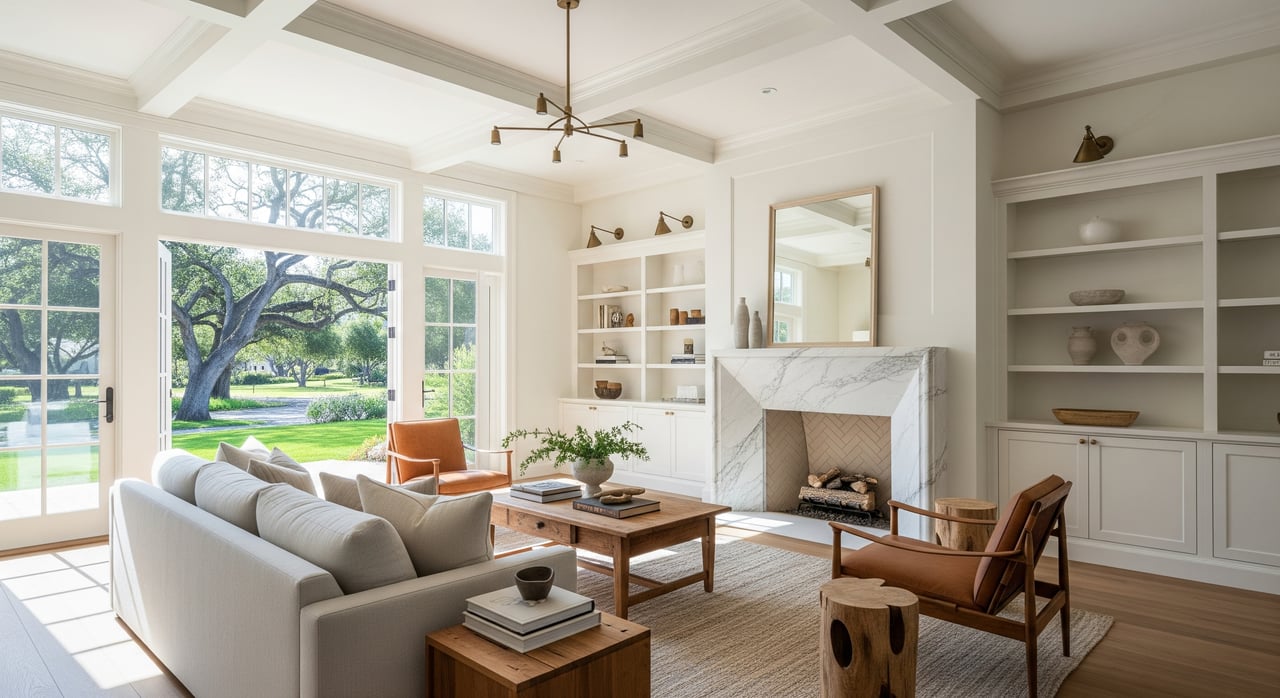
Should you stage or renovate before you list your Mission Hills home? With a discerning buyer pool and many architecturally significant properties, it is a big decision. You want to preserve character, present beautifully, and meet modern expectations without wasting time or money. In this guide, you’ll compare costs and timelines, learn when each path pays off, and get a simple framework tailored to Mission Hills homes. Let’s dive in.
Mission Hills market reality
Mission Hills is known for luxury and historic homes with rich architectural detail. Buyers here tend to be selective, and presentation matters. Many expect modernized kitchens and baths, reliable mechanical systems, and thoughtful staging that highlights space, scale, and lifestyle.
For historic or character homes, buyers also value authenticity. Original moldings, built-ins, and proportions are assets when paired with smart updates. The goal is to balance preservation with function so your home competes at the top of the market.
Staging vs. renovation at a glance
Staging
- Objective: Maximize emotional appeal, define spaces, and elevate photography.
- What it is: Professional staging with rented furnishings, art, and accessories. Virtual staging can help photos but is not a substitute for in-person showings.
- Impact: Often shortens days on market and helps buyers visualize how rooms live.
- Speed and risk: Fast to arrange and low risk.
Targeted renovation
- Objective: Remove buyer objections and support a higher price band.
- What it is: From cosmetic refreshes to kitchen/bath updates and system upgrades.
- Impact: Can unlock higher list price when aligned with local comps.
- Speed and risk: Longer timelines and higher risk of cost or schedule changes.
Key tradeoffs
- Time: Staging typically takes days to a couple of weeks. Renovations can run 6 weeks to several months depending on scope and permits.
- Cost: Staging is usually a smaller upfront expense. Renovations cost more but may justify a larger uplift if the market supports it.
- Buyer perception: Staging boosts presentation. Renovations solve functional or aesthetic gaps that limit offers.
What costs and timelines to expect
Staging costs and timeline
- Setup for luxury or large homes: about $3,000 to $15,000+ depending on rooms staged and quality.
- Monthly rental: roughly $500 to $3,000+ per month.
- Virtual staging: about $50 to $500 per image.
- Timeline: 1 to 2 weeks to book; 1 to 3 days on site to install.
Cosmetic refreshes
- Typical scope: Interior paint, deep clean, declutter, lighting and hardware swaps, plus curb appeal.
- Estimated costs: Paint $5,000 to $25,000; refinish hardwoods $3,000 to $15,000; lighting/hardware $1,000 to $10,000.
- Timeline: 2 to 6 weeks.
Targeted renovations
- Kitchen refresh: $15,000 to $50,000.
- Kitchen remodel with high-end finishes: $50,000 to $150,000+.
- Primary bath remodel: $15,000 to $75,000+.
- Systems work (HVAC, electrical, roof): $10,000 to $50,000+ depending on scope.
- Timeline: 6 weeks to 6+ months, especially with permits.
Permits and historic review
- Many electrical, plumbing, or structural projects require permits and inspections.
- If the property is subject to design review or part of a local historic district, exterior changes may need additional approvals.
- Plan 2 to 8 weeks for permit approvals on moderate projects, and longer if historically sensitive.
- Check in early with the City of Mission Hills building and permit office and the Kansas State Historic Preservation Office.
A simple decision framework
Use these steps to choose between staging and renovating:
Step 1: Quick diagnostic
- Get a pre-listing inspection and a stager walk-through.
- Flag safety, system, and major structural issues. These are deal-breakers and usually need fixing before you list.
- Sort findings into categories:
- Deal-breakers: systems, structural, safety, roof.
- High-impact visible: kitchen, primary bath, major cosmetic items.
- Stagingable: furniture, clutter, minor cosmetics.
Step 2: Market calibration
- Review Mission Hills comps for final sale prices, days on market, and photography quality.
- Note whether top comps were staged or updated.
- Confirm the target price band and buyer expectations for your home.
Step 3: Cost/benefit modeling
- Get at least two contractor bids for any renovation, including permit timing.
- Get two proposals from stagers for full vs. partial staging and photography.
- Model scenarios: expected price uplift minus costs and extra days on market.
Step 4: Make your plan
- Fix deal-breakers first.
- If you need speed or buyer demand is strong, prioritize staging and small cosmetic updates.
- If a targeted renovation can move you into a higher price band supported by comps, and your timeline and budget allow, proceed with a clear scope and contingency.
Step 5: Prep for market
- Schedule staging 1 to 3 days before photography.
- Finish contractor work before listing to avoid mid-escrow surprises.
- Consider sharing a pre-listing inspection summary to build buyer confidence.
Quick heuristics
- If a renovation is more than 5 to 10 percent of the projected list price and buyers are likely to accept cosmetic updates, prefer staging plus cosmetic fixes.
- If one renovation, such as a kitchen or primary bath, can credibly push your home into a higher comp bracket for less than the projected uplift, renovation may pay off.
- For historic homes, protect original character and focus updates on systems and selective modernizations that complement the architecture.
When staging wins in Mission Hills
Staging shines when your systems are sound and the main goal is presentation. It is fast, reversible, and cost-effective for entering the market quickly.
- Best for: Strong demand periods, homes with intact character, and sellers who need a faster timeline.
- Pair with: Paint, lighting, hardware, and curb appeal for a clean, elevated first impression.
- Expectation: Better photos, better showings, and fewer days on market.
Example: Staging plus minor cosmetics
- Scope: Full staging in main living areas and the primary suite, neutral paint, and landscaping refresh.
- Cost estimate: About $20,250 including setup, 1.5 months of rental, paint, and curb appeal.
- Modeled result: List near $1,235,000 versus a $1,200,000 baseline with a shorter timeline of 30 to 45 days.
- Why it works: Presentation lifts buyer confidence without heavy upfront investment.
When renovation pays off
Targeted renovations can unlock higher price bands when comps clearly reward updates. Focus on kitchens, primary baths, and system reliability while preserving architectural details.
Example: Kitchen refresh plus staging
- Scope: New countertops, refaced cabinets, quality appliances, and lighting, plus staging.
- Cost estimate: About $76,000 including paint and landscaping.
- Modeled result: Potential to list near $1,360,000 with 45 to 75 days on market.
- When it fits: Nearby comps show upgraded kitchens selling in a higher tier, and your calendar can support the timeline.
Example: Systems and selective remodel
- Scope: New HVAC, roof repairs, partial window updates, a full kitchen remodel, a refreshed primary bath, and staging.
- Cost estimate: Around $325,000 with a 3 to 6+ month timeline.
- Modeled result: Potential to reposition near $1,700,000 when supply of turnkey homes is tight and buyers pay premiums for high-end finishes.
- Considerations: Longer hold time and higher risk. Confirm permits early and protect your budget with a contingency.
Historic homes: preserve and modernize wisely
Mission Hills has many character homes where original details are a strength. You can often get better buyer response by highlighting craftsmanship while updating systems and select spaces.
- Keep original millwork, built-ins, and proportions wherever feasible.
- Align window and exterior changes with any local design review requirements.
- Confirm if your home is subject to historic oversight and check with the City of Mission Hills and the Kansas State Historic Preservation Office early in planning.
Vendor and timeline management
The right team and process protect your budget, schedule, and listing momentum.
- Vendor selection: Choose pros experienced with luxury and historic properties and ask for local portfolios and references.
- Contracts: Request clear, fixed-price scopes with allowances and milestone dates.
- Scheduling: Photograph 24 to 72 hours after staging and cosmetic work. Avoid photography during active construction.
- Communication: Hold weekly status updates among you, your agent, your contractor, and your stager.
- Insurance: Verify contractor insurance and staging inventory coverage.
- Contingency: Set aside 10 to 20 percent for renovations and require written approvals for change orders.
Quick pre-listing checklist
- Pull 6 to 12 months of Mission Hills comps in your target price band; note staging and update levels.
- Order a pre-listing inspection to catch deal-breakers early.
- Get a stager walk-through and proposal that fits your home’s scale.
- Secure at least two local contractor bids with timelines and permit requirements.
- If renovating, confirm permit and any historic review needs before you start.
- Schedule staging to finish 1 to 3 days before professional photography.
- Prepare a simple improvements list to share with buyers at listing.
Ready to choose your path?
Both strategies can work in Mission Hills. If you need speed and your home shows well with light refreshes, staging may be the smartest move. If data-backed comps show a clear premium for updated kitchens, baths, or new systems, a targeted renovation can justify the added time and cost.
If you want a tailored plan for your home, reach out to the local team that treats luxury as a level of service. Start with a pricing and prep consult with LUX Network KC.
FAQs
What should Mission Hills sellers fix before listing?
- Address safety, structural, roof, and system issues first. These deal-breakers can derail offers and inspections if left unresolved.
How long do permits take for pre-listing work?
- Many projects need permits. Moderate scopes typically take 2 to 8 weeks for approvals, with longer timelines for historically sensitive work.
How much does luxury home staging cost locally?
- Expect about $3,000 to $15,000+ for setup and $500 to $3,000+ per month for rentals, depending on home size and the number of rooms staged.
When is a kitchen refresh worth it in Mission Hills?
- When local comps show that updated kitchens consistently sell in a higher price band and the expected uplift exceeds your total cost and added time.
Can virtual staging replace physical staging?
- Virtual staging helps photos but does not influence in-person showings the way physical staging does, especially in luxury listings.